Financing Options for Florida Investment Properties in 2026
Financing is one of the most overlooked advantages — or limitations — in building a successful real estate portfolio on Florida’s Emerald Coast. In markets like Santa Rosa Beach and along 30A, understanding investor loan structures can determine whether a deal scales your portfolio or restricts future growth.
Unlike primary residence financing, investment property loans require strategic planning around income qualification, debt-service coverage, reserve requirements, and long-term leverage.
This guide breaks down the most effective financing options for Florida investment properties in 2026, specifically for investors targeting Santa Rosa Beach and the broader Emerald Coast.
Why Financing Strategy Matters in Coastal Markets
Coastal markets behave differently than traditional rental markets because:
-
Property prices are higher
-
STR income fluctuates seasonally
-
Insurance costs impact underwriting
-
Appreciation plays a larger role in returns
Financing must support both income performance and long-term portfolio expansion.
Poor loan structure can limit scaling potential even if the property performs well.
Conventional Investment Property Loans
Best for: Long-term rentals (LTR) and strong-income borrowers
Down payment: Typically 20–25%
Interest rate: Higher than primary residence
Reserve requirements: 6–12 months
Conventional loans remain common for inland Emerald Coast rental properties such as:
-
North Santa Rosa Beach
-
Freeport
-
Niceville
-
Crestview
Advantages:
-
Predictable underwriting
-
Competitive rates
-
Long-term amortization
-
Widely available
Limitations:
-
Income qualification required
-
Debt-to-income ratio constraints
-
STR income often discounted
For investors building multiple properties, conventional limits can slow portfolio growth.
Second-Home Financing (Coastal STR Strategy)
Some investors purchase Santa Rosa Beach properties using second-home financing when:
-
Personal use is planned
-
Property meets occupancy requirements
-
Income not needed for qualification
Down payment: Often 10–20%
Rate: Lower than investment property loan
Advantages:
-
Lower rate
-
Lower down payment
-
Easier qualification
Limitations:
-
Cannot rely on projected STR income to qualify
-
Must meet occupancy guidelines
-
Scrutiny increasing in vacation markets
This strategy works well for investors with strong W-2 or business income.
DSCR Loans (Debt Service Coverage Ratio Loans)
DSCR loans have become one of the most popular financing tools for Emerald Coast investors.
Best for: STR-focused investors
Down payment: Typically 20–25%
Qualification: Based on property income, not personal income
DSCR underwriting evaluates whether rental income covers debt payments.
Advantages:
-
No traditional income verification
-
Ideal for STR properties
-
Easier portfolio scaling
-
Flexible borrower profile
Limitations:
-
Slightly higher interest rates
-
Conservative income projections
-
Larger reserve requirements
For Santa Rosa Beach STR investors, DSCR loans often unlock faster acquisition timelines.
Portfolio Loans (Local Bank Lending)
Regional banks sometimes offer portfolio loan products tailored to local investors.
Advantages:
-
Relationship-based underwriting
-
Flexibility on STR income
-
Customized structuring
-
Cross-collateralization options
Limitations:
-
Shorter fixed-rate periods
-
Variable rate exposure
-
Relationship requirements
Local familiarity with 30A rental markets can provide underwriting advantages.
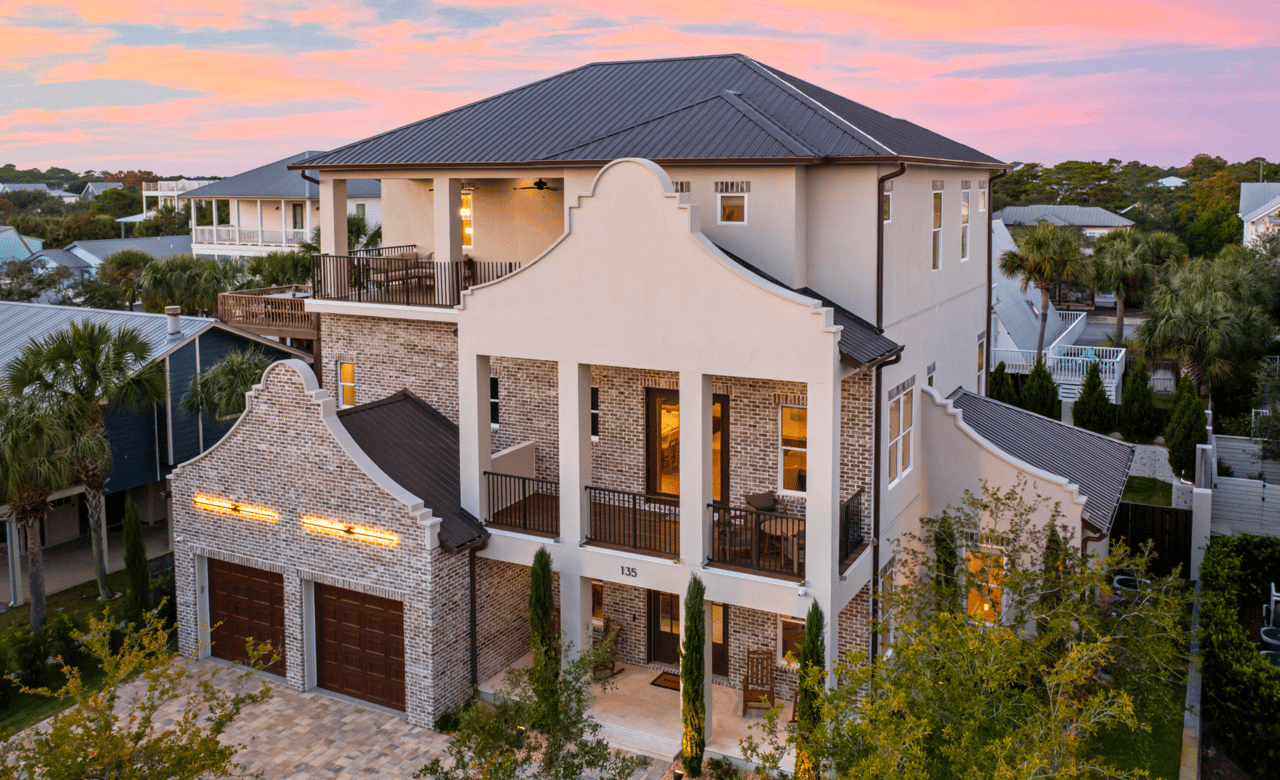
Jumbo Loans for Luxury 30A Properties
Luxury beach homes often exceed conventional loan limits.
Best for: $2M+ properties
Down payment: 20–30%
Qualification: Strong income + reserves
Advantages:
-
Competitive rates for qualified borrowers
-
Suitable for high-value coastal homes
Limitations:
-
Strict underwriting
-
Large reserve requirements
-
Higher liquidity standards
Many luxury 30A investors combine jumbo financing with significant cash equity.
1031 Exchange Strategy
Investors selling property elsewhere often redeploy capital into Santa Rosa Beach using a 1031 exchange.
Benefits:
-
Capital gains deferral
-
Portfolio repositioning
-
Upgrading into higher-quality coastal assets
Common scenarios:
-
Selling Midwest rental portfolio → buying 30A STR
-
Selling inland Florida LTR → upgrading to beach property
-
Consolidating multiple assets → acquiring luxury home
1031 exchanges remain powerful wealth-building tools in coastal markets.
Cash Purchases and Leverage Balance
Cash purchases remain common in Santa Rosa Beach due to:
-
High-net-worth buyer presence
-
Competitive coastal inventory
-
Faster closing timelines
However, many investors still use moderate leverage to:
-
Preserve liquidity
-
Expand portfolio faster
-
Enhance ROI
Optimal leverage depends on:
-
Risk tolerance
-
Portfolio diversification
-
Interest rate environment
-
Income stability
Insurance & Cost Considerations in Loan Structuring
Coastal Florida financing requires accounting for:
-
Wind insurance
-
Flood insurance
-
HOA dues
-
STR management costs
-
Property taxes
These impact:
-
Debt service ratios
-
Cap rate calculations
-
Loan qualification
Underestimating operating costs can affect DSCR approval and overall ROI.
Financing Sequencing for Portfolio Growth
Strategic investors often follow a structured financing progression.
Example:
-
Second-home loan on first 30A STR
-
DSCR loan for second STR
-
Conventional loan for inland LTR
-
Cash-out refinance to redeploy equity
This approach:
-
Preserves capital
-
Maximizes scale
-
Balances risk
-
Enhances flexibility
Financing strategy should align with 5–10 year portfolio goals.
Interest Rate Environment in 2026
While rates fluctuate, investors focus on:
-
Long-term appreciation
-
Income coverage
-
Refinance potential
-
Leverage discipline
In scarcity markets like Santa Rosa Beach, appreciation often offsets moderate rate increases over time.
Timing the market is less effective than structuring financing correctly.
Choosing the Right Loan for Your Emerald Coast Investment
Investors should evaluate:
-
Property type (STR vs LTR)
-
Income qualification needs
-
Cash reserves
-
Long-term hold horizon
-
Portfolio size
-
Risk tolerance
Each property may require a different financing approach within the same portfolio.
Working With a Santa Rosa Beach Investment Specialist
Coastal financing requires coordination between:
-
Lender
-
Insurance provider
-
Property manager
-
Realtor
-
Tax advisor
Understanding rental performance, insurance requirements, and zoning ensures loan approval aligns with realistic income projections.
Steve Philpot works with Emerald Coast investors to structure acquisitions and financing strategies that support scalable Santa Rosa Beach real estate portfolios.
Frequently Asked Questions About Florida Investment Property Financing
What is the best loan for short-term rentals in Santa Rosa Beach?
DSCR loans are often ideal because qualification is based on rental income rather than personal income.
Can I use projected Airbnb income to qualify?
Yes, with DSCR loans. Conventional lenders may discount or restrict projected STR income.
How much down payment is required for Emerald Coast investment property?
Typically 20–25%, though second-home loans may allow lower down payments.
Are jumbo loans common on 30A?
Yes. Luxury properties often require jumbo financing due to higher price points.
Is it better to pay cash or finance?
It depends on portfolio goals. Moderate leverage can accelerate scaling, while cash reduces risk.
About Steve Philpot
Steve Philpot is an Emerald Coast real estate advisor specializing in Santa Rosa Beach and 30A investment properties. He helps investors structure acquisitions, evaluate financing options, and build scalable Florida Gulf Coast real estate portfolios.